The First Aid Kit That Actually Matches Toddler Injuries (Not a Generic Adult Kit)
Disclosure: As an Amazon Associate I earn from qualifying purchases. This page may also contain other affiliate links. If you buy something through a link here, we may earn a commission at no extra cost to you. We only recommend products we've researched and believe are genuinely useful. See our privacy policy for details.
Most first aid kits are not built for your house. They’re built for a job site, a camping trip, or a car trunk. That means a lot of gauze rolls for wounds you’ll never see, and almost nothing for the stuff that actually happens with a toddler around.
What kids actually get hurt by
Think about the last six months. It’s probably one of these:
- Skinned knees from the driveway or playground
- Small cuts from “helping” in the kitchen
- Bug bites that need something to stop the itch
- Splinters from the backyard or a wood floor
- Bumps and bruises that need an ice pack more than a bandage
- Fevers that show up at 9pm on a Tuesday
That’s a very different list than “puncture wound” or “sprained ankle on a trail.” A kit built for adults in the woods skips half of this and loads up on stuff you’ll never open.
What to actually look for
A kit that fits a young-kid household should have:
- A lot of bandages, in a lot of sizes. Kids go through them fast, and small kids need small bandages, not just the standard strip.
- Actual kid-friendly bandages. Character designs or bright colors matter more than you’d think (more on that below).
- Basic wound care: antiseptic wipes, antibiotic ointment, gauze pads, medical tape.
- A thermometer, because fevers happen more than cuts do.
- Tweezers, for splinters and ticks.
- A cold pack, for the bumps that don’t break skin but still need something.
- A small, portable version you can toss in a diaper bag or car, separate from the big one that lives in the bathroom cabinet.
That last point matters more than people expect. The injuries at home and the injuries at the park or grandma’s house aren’t different in kind, but you need supplies in both places, not just one giant kit sitting in a closet.
Our pick: General Medi 2-in-1 Kit
This is a value pick, full stop. There’s no premium alternative in this space worth the extra money, because the extra money in “premium” first aid kits usually just buys you more trauma gear (burn dressings, splints, tourniquets) that a toddler household will never use.
The General Medi 2-in-1 kit gives you a 215-piece main kit for the house, plus a 43-piece portable kit that fits in a diaper bag, glovebox, or backpack. One purchase covers both “cut in the kitchen” and “scraped knee at the playground.”

What makes it fit a kid household specifically:
- Bandage variety and volume. You will run out of bandages before almost anything else in the kit. This one is stocked heavy on them.
- The portable kit is a real second kit, not a thinned-out afterthought. It’s built to actually leave the house.
- Everyday basics are covered: antiseptic wipes, gauze, tape, tweezers, a thermometer, an instant cold pack.
- Price. You’re getting two kits for less than most single premium kits cost.
The main tradeoff: it’s not going to have specialty items like a SAM splint or burn gel packs. For a household whose worst weekly injury is a scraped knee or a bug bite, that’s not a real loss.
The part nobody talks about: kids like the kit itself
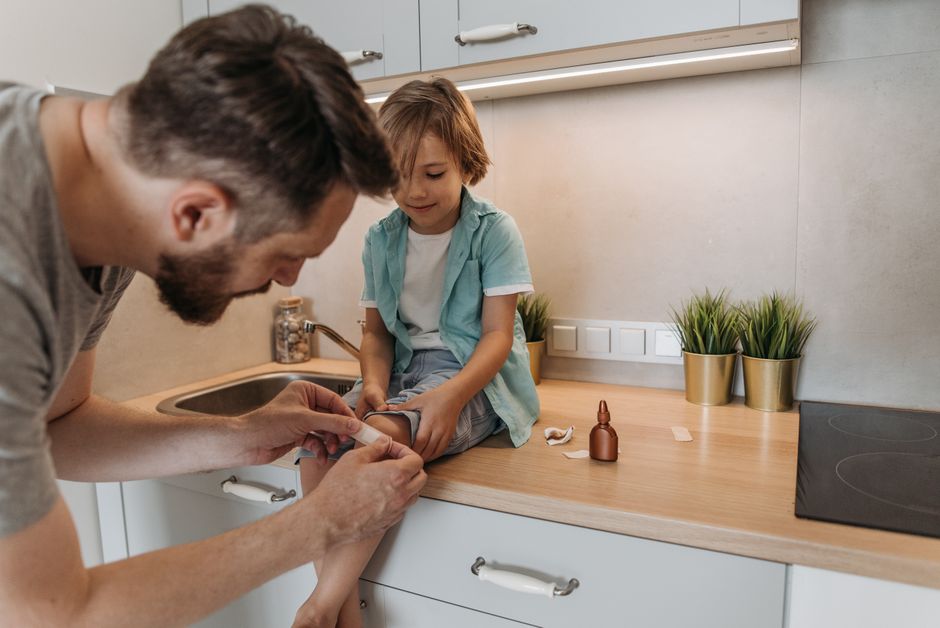
Here’s the thing I didn’t expect until I had one in the house: kids like being handed the kit and picking their own bandage. Sometimes it’s for a real scrape. Sometimes it’s for a bump that didn’t even leave a mark, and they just want the ritual of it.
Let them pick. It doesn’t cost you anything, and it turns a scary moment into a small decision they get to make.
There’s also a quieter benefit here. Kids see first aid handled on TV and in cartoons: someone gets hurt, a kit comes out, it’s calm and organized, and things get better. When you actually have a real kit, in a real bag, that you pull out and go through step by step, you’re teaching them that getting hurt has a calm process attached to it. That’s a habit worth building early, long before they’re old enough to patch themselves up.
Bottom line
Skip the kit built for a camping trip. Get one built for skinned knees, splinters, and fevers, with a portable piece that actually leaves the house. The General Medi 2-in-1 kit covers both ends for less than most single kits cost, and it’s the one we’d recommend regardless of budget, because there’s no real “upgrade” version worth paying more for here.