Working From Home With a Toddler and No Backup: What Actually Works

Disclosure: As an Amazon Associate I earn from qualifying purchases. This page may also contain other affiliate links. If you buy something through a link here, we may earn a commission at no extra cost to you. We only recommend products we've researched and believe are genuinely useful. See our privacy policy for details.
Forget the Instagram version. There’s no color-coded bin system that keeps a toddler quiet for a two-hour Zoom block. Here’s what actually gets work done when you’re the only adult in the house.
Your Real Work Windows Are Shorter Than You Think
Stop planning in “workdays.” Plan in blocks.
A solo parent with a toddler gets maybe three real windows a day:
- Nap time (60-90 minutes, if you’re lucky and it’s not the week they’re dropping the nap)
- Early morning (before they wake up, if you can drag yourself up)
- Screen time or independent play (20-40 minutes, tops)
That’s it. Maybe 2.5 hours of real focus time on a good day. Plan your calendar around this, not against it.
What this means practically:
- Put your hardest task (the one needing full brain power) in nap time. Every time.
- Save easy, interruptible tasks (email, filing, scheduling) for the scraps of time.
- Job hunting? Do applications during naps. Do research or LinkedIn scrolling during screen time. You can stop and start research without losing your place.
- If you have a call that can’t move, schedule it for nap time and have a backup plan (more screen time, a grandparent on video chat, whatever) in case the nap doesn’t happen.
Don’t fight this rhythm. Toddlers don’t negotiate.
Build a Parallel-Play Zone, Not a Home Office
The point isn’t a beautiful desk setup. The point is your kid can see you and play near you without needing you every 90 seconds.
Put your desk where you can see the play area, and put the play area within arm’s reach. Same room, if your space allows it. This does two things: it cuts down on the “MOM. DAD. WATCH THIS” interruptions because they can already see you, and it means you don’t have to fully stop working to respond to a “look!” moment. A glance and a “cool buddy!” over your shoulder buys you another five minutes.
What actually keeps a toddler occupied nearby (not perfectly, just longer):
- Rotate toys weekly. A toy they haven’t seen in 10 days is new again. Keep a bin in a closet and swap it out.
- Water play at a low table with towels underneath. Ridiculously effective. Also ridiculously messy, but it buys real minutes.
- A “yes space.” One corner or low shelf where everything is safe and theirs to touch. No supervision decisions needed, which means no interruptions for you.
- Sticker books, magnet boards, chunky puzzles. Anything with pieces holds attention longer than anything with buttons.
Skip the elaborate sensory bins that take 20 minutes to set up for 8 minutes of play. The math doesn’t work when you’re the one setting it up.
Headphones That Let You Work AND Still Hear “Mom, I Pooped”
This is the gear question that actually matters for solo WFH parents. You need noise cancellation for calls and focus, but you cannot wear headphones that block out a toddler falling off the couch. You need a “still hear the kid” mode, not just noise cancelling.
Look for a transparency or “aware” mode you can flip on fast, ideally with a physical button or a quick tap, not three menu taps into an app while your kid is mid-meltdown.
For the Money-Conscious: Sennheiser MOMENTUM 4
This is the pick if you want real ANC, real call quality, and a transparency mode that doesn’t cost you an extra $150.
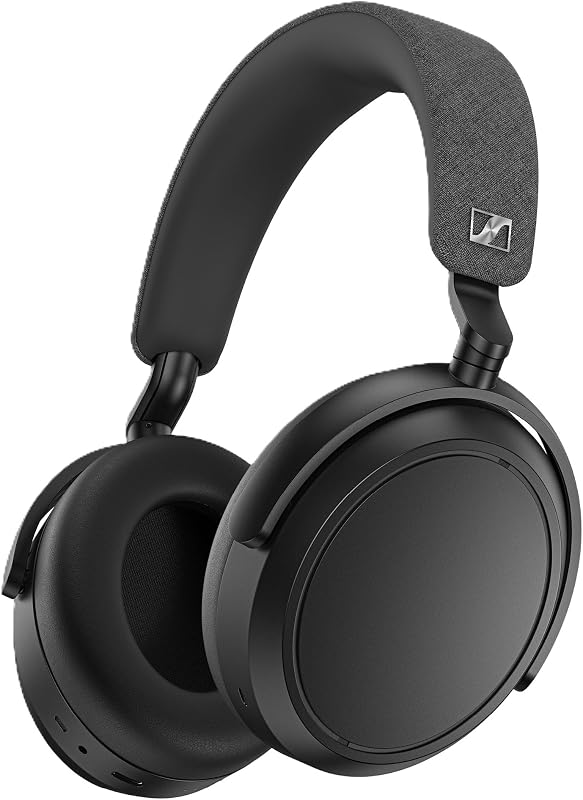
The battery life alone is worth it for parents: it runs close to 60 hours, so you’re not hunting for a charging cable during the one window you have to work. The transparency mode is a single tap on the ear cup, and it’s genuinely good, not the muffled “sort of hear things” mode some cheaper headphones fake it with. For video calls, the mic quality holds up fine for interviews and meetings.
Check current price on Sennheiser MOMENTUM 4
For the Big Spenders: Sony WH-1000XM6
This is the pick if the ANC and the “still hear the kid” feature need to be as close to perfect as headphones get right now.

The real functional edge here is automatic speech detection: the headphones sense when someone nearby is talking (like a toddler yelling for you) and automatically dial down the noise cancelling so you hear them, then dial it back up when they stop. You don’t have to remember to tap anything. For a solo parent whose hands are usually full or covered in something sticky, not needing to fumble with a button matters more than it sounds like it would. The ANC itself is best-in-class, which matters if your kid’s play area is loud (and it will be).
Check current price on Sony WH-1000XM6
Either one is a real upgrade from working with earbuds or nothing. The auto speech-detection on the Sony is the one feature that’s hard to go back from once you’ve used it, but the Sennheiser’s manual tap mode does the job for a lot less money.
Set Expectations Before You Set a Schedule
Tell your kid what’s happening before you tell your calendar what’s happening. “I’m going to work on the computer while you play with your blocks, and then we’ll have snack” takes 10 seconds and heads off a chunk of interruptions. Toddlers do better with a heads-up than a surprise, even a small one.
Same goes for your own expectations. You will not get a full 8-hour workday out of naptime math. Plan for 3-4 focused hours and treat anything beyond that as a bonus, not a baseline. Job hunting on this schedule takes longer than it “should,” and that’s normal, not a sign you’re doing it wrong.
The Bottom Line
You don’t need a perfect setup. You need a rhythm that matches how toddlers actually behave, a play zone in eyeline of your desk, and headphones that don’t turn your kid into background noise you can’t hear at all. Get those three things right and the rest is just showing up for the windows you actually have.
Keep Reading
- Smart Plug + Echo Dot — voice-control the white noise machine or a lamp without leaving your desk
- Solo Night Wake-Ups: The Sleep Tech Actually Worth Buying — protect the sleep that makes those focus windows possible in the first place
- Diaper Bags for Dads — more solo-dad gear picks