The Step Stool That Actually Gets Your Toddler Washing Their Own Hands
Disclosure: As an Amazon Associate I earn from qualifying purchases. This page may also contain other affiliate links. If you buy something through a link here, we may earn a commission at no extra cost to you. We only recommend products we've researched and believe are genuinely useful. See our affiliate disclosure for details.
The problem with most step stools
Most step stools are one flat platform, sitting low on the floor. That works for reaching a light switch. It does not work for a bathroom sink, which is way higher up than a kitchen counter your kid needs to reach.
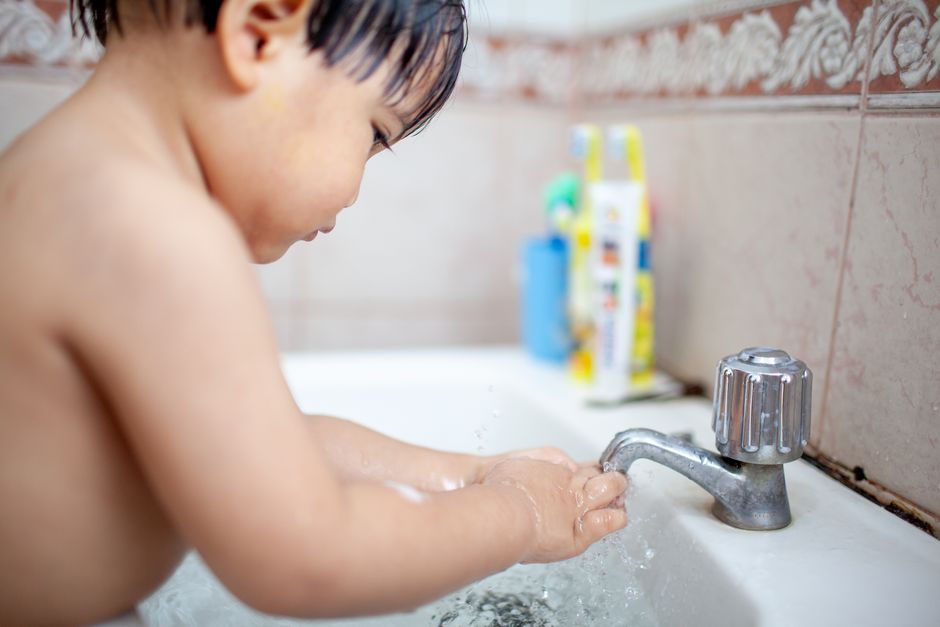
A toddler standing on a single low step still can’t get their hands under the water. So you end up lifting them anyway, ten times a day, every single time they need to wash up or brush their teeth. The whole point of a step stool is to stop doing that.
What actually makes a bathroom stool work
Bathroom floors get wet. Kids get excited and climb fast. A stool that isn’t built for this specific job turns into a safety problem, not a solution.
Look for these three things:
- Two steps, not one. A single step usually isn’t tall enough to close the gap to a sink. Two steps get a toddler high enough to actually reach the faucet and see themselves in the mirror.
- A non-slip surface and rubber feet. Wet feet on a wet tile floor is exactly the situation a bathroom stool has to survive.
- A handle. Something for a toddler to grab while stepping up or down, especially useful during potty training when they’re moving fast and not always paying attention.
How tall does the stool need to be?
Most bathroom vanities stand 30 to 36 inches tall, with newer “comfort height” vanities at the top of that range. How far your kid can reach into the sink depends on the vanity more than on the stool, so measure first:
- Measure from the floor to the top of the sink rim.
- Stand your kid against the wall and measure from the floor to their elbow.
- The stool’s top step has to make up most of that gap. Their elbows should sit at or just above the rim, so their hands reach the water without leaning on the counter.
A single low step adds a handful of inches. A two-step stool adds more, which is why the pick is a two-step. If your vanity is a 36-inch comfort-height one, check the listed top-step height before buying any stool.
Which toddler step stools are safest?
The safest stool is the one that does not move or tip when a 30-pound kid lunges off it toward the faucet. In order of importance:
- A wide, flat base with all four feet on the floor. Stools that rock on tile are out.
- Rubber feet and a textured top. Both will get wet. Both still have to grip.
- A handle or raised sides at toddler-hand height, so the climb up has something to hold.
- A weight rating well above your kid’s weight, so it is not flexing under them.
- Low enough to step down from. Taller is not always better. If your kid cannot step down facing forward without a jump, it is too tall for them this year.
Two habits matter as much as the stool: keep it away from the tub edge, and keep the toilet lid down when you are not in the room with a kid who likes to climb.
Our pick: Forbena 2-Step Stool for Bathroom Sink
The Forbena 2-Step Stool hits all three of those points. It’s a two-step design built specifically for bathroom use, with a non-slip surface on each step and a handle built into the top for stability going up and down.
It’s tall enough that most toddlers can actually reach a standard bathroom sink without help, which means they can wash their hands after using the potty, brush their teeth, and rinse off without you lifting them onto the counter. That’s the whole goal: independence for the stuff they do multiple times a day, not just a novelty stool that sits in a corner.
It also works double duty for potty training. Having a sturdy, grippy stool right next to the toilet makes climbing on and off less scary and less of a production, and the handle gives them something to hold onto while they’re getting settled.
Why we’re not recommending Dreambaby here
Dreambaby makes solid toddler gear, and normally we’d want to give you a premium alternative to compare against. But right now, the Dreambaby option sold on Amazon is a two-pack of single-step stools, not a true two-step model.
A single step just doesn’t solve the reach problem for most bathroom sinks. Since there isn’t a genuine two-step Dreambaby product to compare, this is a value pick only: the Forbena stool is the one we’d actually buy.
For the Money Conscious
This is already the budget-friendly call. A two-step stool with a non-slip surface and a handle covers everything you need for handwashing, teeth brushing, and potty training, without paying for extra features you won’t use, like fold-flat storage or matching bath accessory sets. If your kid just needs to reach the sink safely, this does the job.
Who should skip it
If your sink is unusually low, or your bathroom counter overhangs in a way that makes a two-step stool awkward to tuck underneath, measure first. A stool that sticks out too far becomes its own tripping hazard in a small bathroom.
Also, if you have more than one toddler sharing a bathroom, consider whether one stool is enough or if you want a second so nobody’s waiting around mid-toothbrushing meltdown.
Questions parents ask about bathroom step stools
At what age can a toddler use a step stool at the sink? When they can climb two steps on their own with a hand on the rail and step down facing forward. For most kids that lands somewhere in the second year, and it varies a lot. Until then, the stool is for supervised use only.
Is a one-step or two-step stool better for the bathroom? Two-step for the sink, nearly always. One-step stools cover a toilet or a light switch. See the measuring section above.
Can I use a kitchen step stool in the bathroom? If it has rubber feet and a non-slip top, yes. Most kitchen stools are smooth plastic, and smooth plastic on wet tile is the fall you are trying to avoid.
Where should the stool live when not in use? Tucked under the vanity, away from the tub. A stool in the middle of a small bathroom is a trip hazard for the adult, too.