The One-Handed Test: Baby Gear That Actually Works When You're Solo
Disclosure: As an Amazon Associate I earn from qualifying purchases. This page may also contain other affiliate links. If you buy something through a link here, we may earn a commission at no extra cost to you. We only recommend products we've researched and believe are genuinely useful. See our privacy policy for details.
Nobody designs a product spec sheet around “can a tired adult operate this while holding a screaming infant and nothing else.” But that’s the actual test. If you’re the only adult in the house for 10+ hours a day, gear either survives contact with reality or it becomes the thing gathering dust in the closet by week three.
I started running everything through what I call the one-handed test: can I put this on, load it, fold it, or fasten it with one hand while the other arm is fully occupied holding a baby? Here’s what passed, what failed, and why the failures actually matter: not just as an inconvenience, but as a real bottleneck in your day.
Why This Test Matters More Than Star Ratings
A four-star product can still fail you completely if the fifth star it’s missing is “doesn’t require a second person.” Most gear reviews are written by people testing products in ideal conditions: good lighting, full attention, maybe a partner handing them things. That’s not the solo parenting reality. The baby is crying, you need both hands free right now, and the clock that matters is “how long until this kid loses it,” not “how elegant is the buckle mechanism.”
Carriers: The One Category That Can’t Fail You
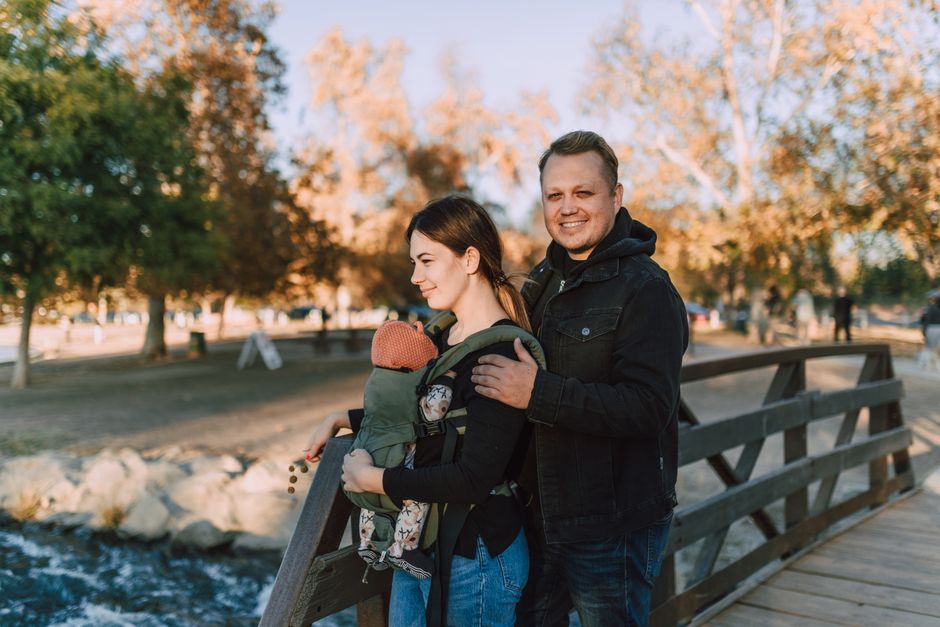
Carriers are the single most important item on this list because they’re the only piece of gear whose entire job is to free up your hands. If your carrier itself requires two hands and a calm baby to put on, it has failed at its one purpose.
What to look for: a one-handed waist buckle you can find by feel, a structure that stays open and rigid enough to drop a squirming baby into without needing to line up straps first, and an adjustment system you can tighten one-armed after the baby’s already in.
The pick: Ergobaby Omni Classic. Check current price

I went with the Omni Classic over the pricier Omni Deluxe on purpose. They carry the same 4.5-star rating, but the Classic has dramatically more reviews behind it, and after using it daily for months I couldn’t find a real functional gap between the two. The Deluxe adds a slightly more breathable mesh panel and a marginally softer strap material. Nice if you’re outdoors constantly in a hot climate, irrelevant to the one-handed test. The buckle mechanics, the seat structure, the newborn-to-toddler range (7-45 lbs, no infant insert needed), and the one-arm adjustability are functionally identical.
For the Money Conscious: the Omni Classic is the money-conscious pick here, and it’s not a compromise pick. It’s just the smarter buy. Save the difference and put it toward diapers.
For the Big Spenders: if you’re outdoors in serious heat for hours most days, the Omni Deluxe’s mesh is a genuine (if small) upgrade. Otherwise you’re paying extra for a fabric swatch.

What fails the test: wrap-style carriers (gorgeous, useless solo: you need two hands and about four minutes to tie one on), and any structured carrier with a buckle system that requires looking down and using both hands to click in, which defeats the purpose the moment the baby is already mid-meltdown in your one free arm.
Bottle Prep: Where Most Systems Quietly Fail
Bottle prep is the sneaky one-handed failure point because nobody thinks about it until 3 a.m. when the baby’s already crying and you realize the formula dispenser needs two hands to twist open, or the bottle warmer has a lid you have to hold down while pressing a button.
What passes: single-hand-operable formula dispensers with a lever you can press with your palm while the bottle sits underneath (no two-handed twist-and-pour), and electric warmers with a simple drop-in-and-press-one-button interface rather than a dial you have to hold steady.
What fails: pre-measured formula pucks that need to be manually broken apart before use, any warmer requiring you to hold a lid or valve shut, and bottles with narrow necks that need two hands to align the nipple and ring during a one-armed hold.
The unsexy truth is that the cheapest option in this category, a wide-mouth bottle and a scoop-and-shake approach, often beats expensive “smart” bottle systems on the one-hand test, because there’s less mechanism to fumble. Complexity is usually the enemy here, not the friend. If you’re washing a lot of these by hand, it’s also worth checking whether an automatic bottle sterilizer actually pencils out for your volume.
Strollers: Fold-Down Speed Is the Real Spec
Every stroller ad shows someone calmly folding the frame in a driveway with both hands free. That’s not your life. Your version is: baby on one hip, diaper bag sliding off your shoulder, and you need this thing folded and in the trunk before the parking meter argument in your head gets worse.
What passes: one-hand, one-motion fold mechanisms (usually a strap-pull or button-and-kick combo) that don’t require you to also hold the stroller upright while folding it. Look for models that stand on their own once folded. That’s the tell that someone actually one-hand-tested it.
What fails: dual-lever folds that need one hand on each side simultaneously, and umbrella strollers that fold flat but then flop over on the ground the second you let go, forcing you to either crouch and hold it or leave the baby momentarily unsupported to catch it.
For the Money Conscious: budget umbrella strollers are genuinely fine for quick errands and pass the one-hand fold test surprisingly often. The standing-up-after-folding trick isn’t reserved for premium frames.
For the Big Spenders: full-size travel systems with a one-hand fold are worth it if the stroller lives in your trunk daily rather than occasional outings; the sturdier frame and larger storage basket earn their keep over years of use.
High Chairs: The Buckle Is Everything
This is the category people underestimate most. A high chair only matters at mealtimes, which means three-plus times a day you’re trying to strap a squirming, food-motivated toddler into a five-point harness, usually with one hand while the other keeps them from face-planting off the chair.
What passes: a single central buckle you can click with one hand without threading multiple straps first, and a tray that pops on/off with one motion (not a two-handed squeeze-and-slide).
What fails: harnesses with a separate crotch strap and two shoulder straps that all need to be gathered and aligned before the buckle even clicks. Great for containment once you get there, miserable to actually operate one-handed while the kid is already leaning sideways toward the dog’s water bowl.
For the Money Conscious: a basic clip-on chair that attaches to your existing dining chair often has a simpler harness than $300 all-in-one systems, precisely because there’s less chair to engineer around.
For the Big Spenders: if you want the multi-stage high chair that grows from infant to “big kid chair,” check the harness mechanism specifically before buying. Some premium models actually get worse on one-hand usability because the harness is built for adjustability across age ranges rather than speed of use.
The Bottom Line
Run everything through this filter before you buy: can I operate this with one hand, right now, while holding a baby who does not want to cooperate? If the answer’s no, it doesn’t matter how many stars it has. It’s going to fail you exactly when you need it most. The good news is that the gear that passes isn’t always the most expensive option. Sometimes, like with the Omni Classic, the version that actually gets tested by thousands of solo parents in real conditions is also the one that costs less than its flashier sibling.
Keep Reading
- Diaper Bags for Dads — the bag that has to keep up with the carrier
- Is an Automatic Bottle Sterilizer Worth It? — the honest math on the bottle-prep side of things
- Best Baby-Proofing Kits for First-Time Parents — what to sort out before the crawling starts